Iris versicolor: the Blue Flag
This guest blog is part of a series of articles written by Mount Allison students, as part of a partnership between Nature NB and the Applied Native Plants and Pollinator Conservation course. Thanks to Dr. Emily Austen and the students for this ongoing collaboration!
By Reaghan Melanson
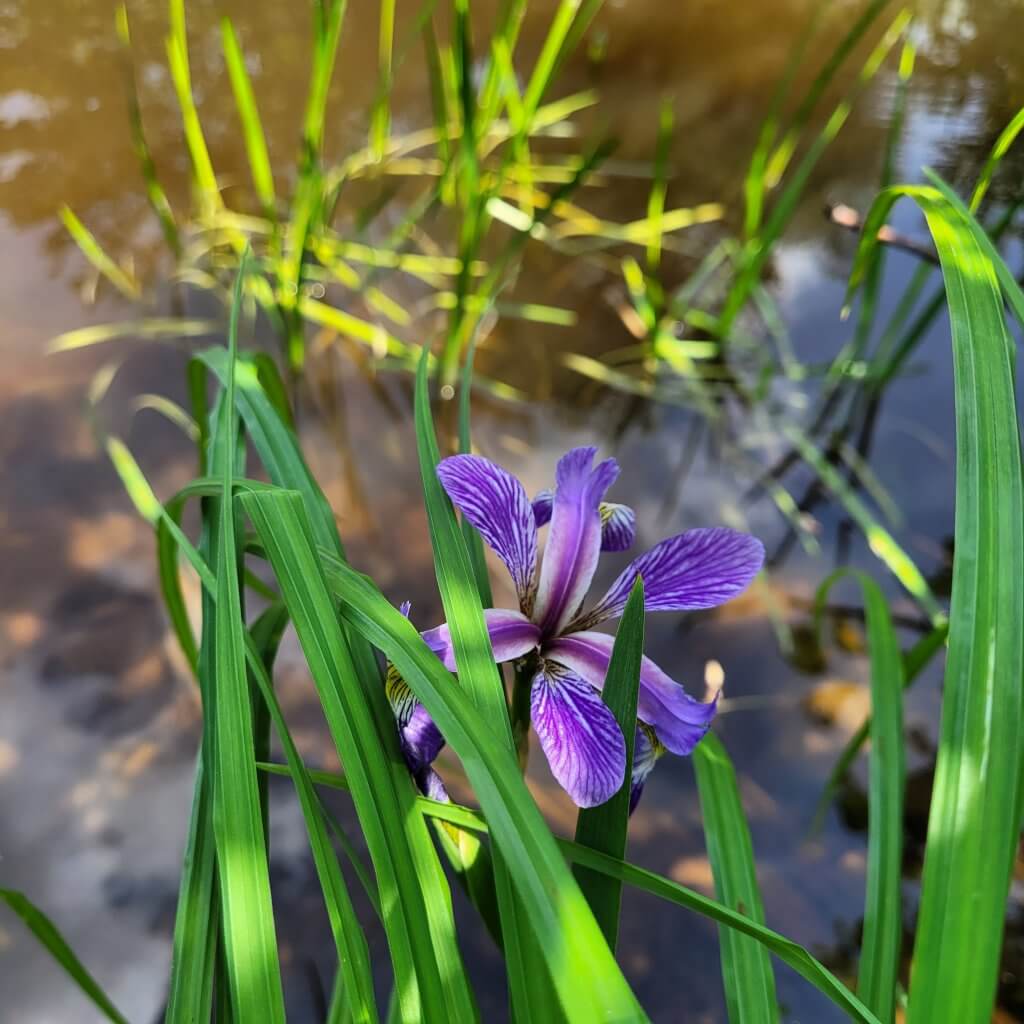
The Iris versicolor, commonly known as the Blue Flag Iris, is a native plant found in New Brunswick and other provinces from Manitoba to the eastern Canada. In the past, Indigenous peoples harvested the dried roots of the blue flag iris from late summer to early fall. They used these roots as detoxifiers for the liver and kidneys, as well as treatments for skin conditions and pain relief (Smith, 1933). The Iris roots are toxic if not prepared properly, some tribes used the roots to weave baskets and mats.
This beautiful blue flower grows in wet areas like woods, meadows, and along the edges of lakes, rivers, and ponds (CWF). Its bright colors help attract pollinators, in this case the main pollinator of this species is an order of insects called Hymenoptera, which consists of wasps, ants, sawflies and most importantly bees (Pellegrino, 2015). The relationship between the blue flag iris and the bee is mutualistic: the bee collects nectar from the flower while also helping to carry its pollen to other flowers. This type of relationship is beneficial for both sides, as each gains access to essential resources for survival and reproduction even though little is known about the reproductive success of the blue flag iris (Pellegrino, 2015).

The Blue Flag Iris typically blooms between May and June, featuring long, grass-like leaves and growing up to 3 feet tall. After flowering, it produces seed capsules that mature to a greenish-brown hue. These capsules eventually split open, releasing the seeds. In addition to seed dispersal, the plant can also reproduce asexually by spreading through underground rhizomes (Chesapeake).
In New Brunswick the blue flag iris has a conservation status of G5, secure (NatureServe), but just because it is secure now does not mean it will be in the future. Due to the blue flag iris’s sweet taste insects like noctuid moth larva and grasshoppers like to eat the petals of fully bloomed blue flag irises (Needham, 1900). In other speices, this can affect the reproduction of the flower by altering its appearance to pollinators or destroying the reproductive organs of the plant (Krupnick & Weis, 1999). Although this is not a big problem, habitat destruction can be. A lot of wooded areas, or marshes, the preferred habitat of the iris, are being destroyed for societal use, especially with New Brunswick’s fast-growing population. This is certainly something to consider for future populations.
References
Chesapeakebay. N.d. https://www.chesapeakebay.net/discover/field-guide/entry/blue-flag
Krupnick, Gary & Weis, Art. (1999). The Effect of Floral Herbivory on Male and Female Reproductive Success in Isomeris arborea. Ecology. 80. 135-149.
Nature Serve. N.d. https://explorer.natureserve.org/Taxon/ELEMENT_GLOBAL.2.132305/Iris_versicolor
Needham, J. G. (1900). The Fruiting of the Blue Flag (Iris Versicolor L.). The American Naturalist, 34(401), 361–386.
Pellegrino G. 2015. Pollinator limitation on reproductive success in Iris tuberosa. AoB PLANTS.
Smith, H. H. 1933. Ethnobotany of the Forest Potawatomi Indians. Bulletin of the Public Museum of the City of Milwaukee. 7: 1-230