
Text and images by Brianna MacEachern
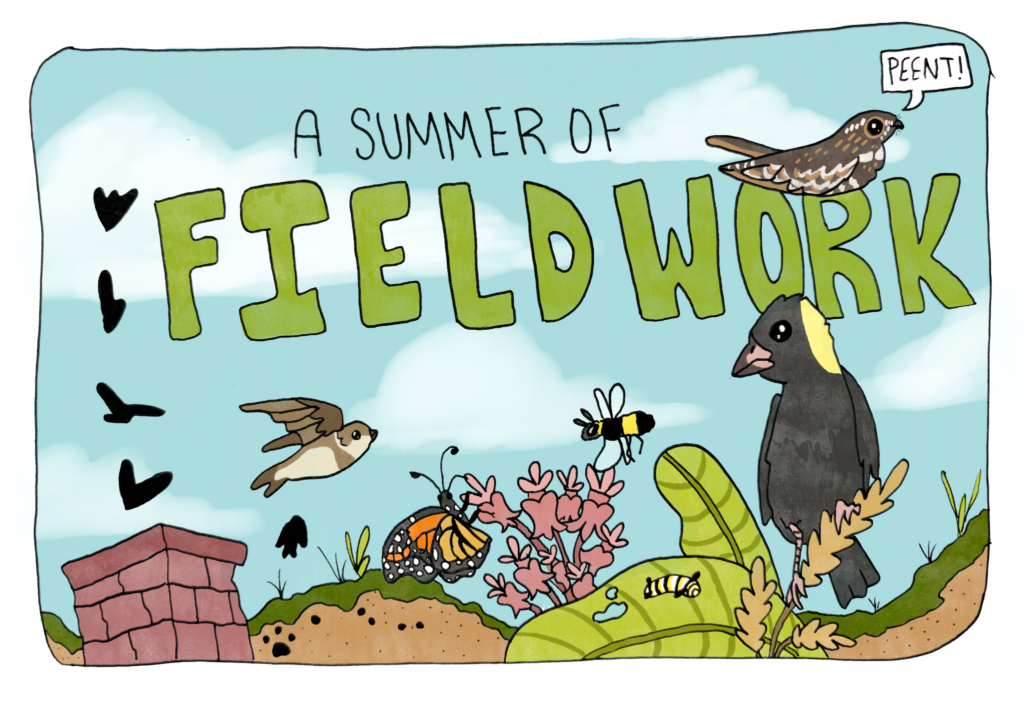
This summer I joined Nature NB as a Species At-Risk Technician. Throughout the past few months, I’ve done fieldwork for both bird and pollinator species at-risk throughout New Brunswick, learning so much about species at-risk conservation thanks to my wonderful co-workers and being able to have these hands-on experiences.
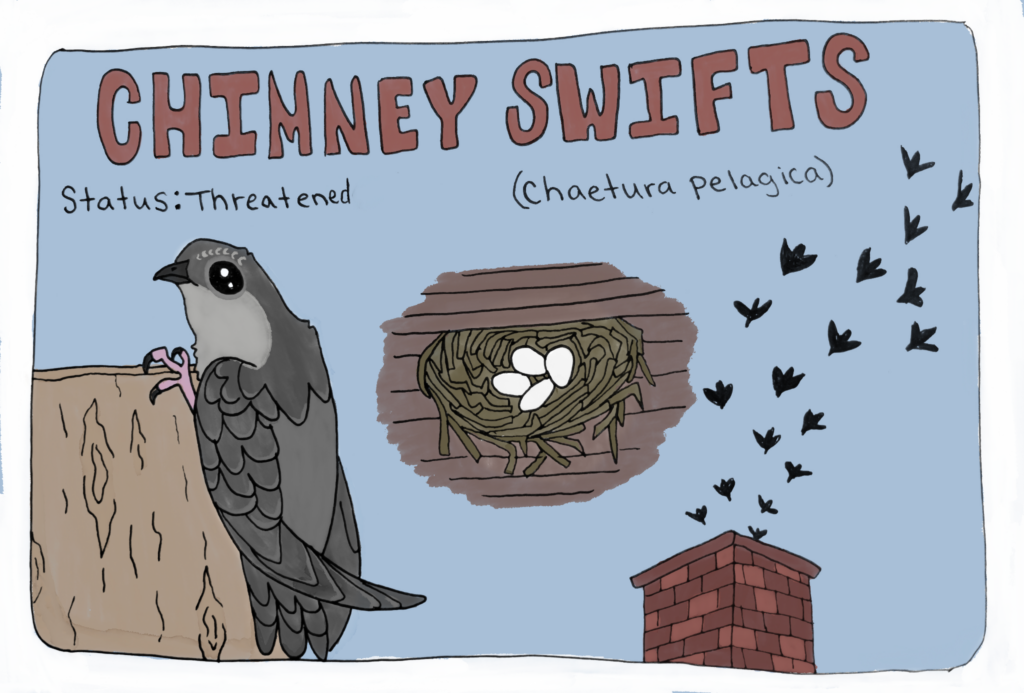
At the very beginning of the summer, I learned about Chimney Swift monitoring. Chimney swifts are small aerial insectivores who make their nests in the chimneys of buildings. I quickly realised with Chimney swift monitoring, you can’t look away for a second, they swoop quickly into the chimneys within the blink of an eye! The survey protocol involves going to a site 30 minutes before sunset and then waiting for the magic to happen. Once, a group of swifts kept flying around a chimney without entering it, almost like they were teasing me! I would think they were going to go into the chimney finally, but then they would prank me and swoop away. Eventually, one-by-one, they dove into the chimney for rest after a long day of catching insects.
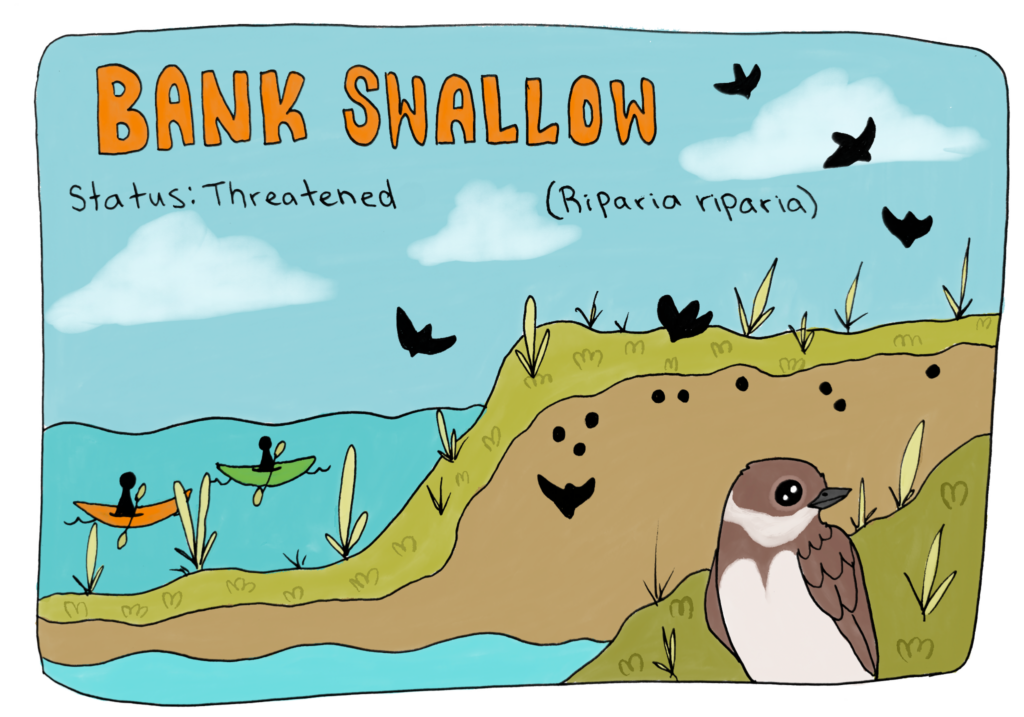
The next survey method I learned about was for Bank swallows. Bank swallows are aerial insectivores who nest along banks of water bodies and sometimes in pits. Bank swallow colonies can sometimes be difficult to access and so, in the kayaks we go! My favourite memory from this survey was a warm July day, where we paddled through the water along the coast, on the hunt for a swallow colony. Sometimes it’s difficult to tell if a hole is from a rock that had fallen, or if it was made by a swallow!
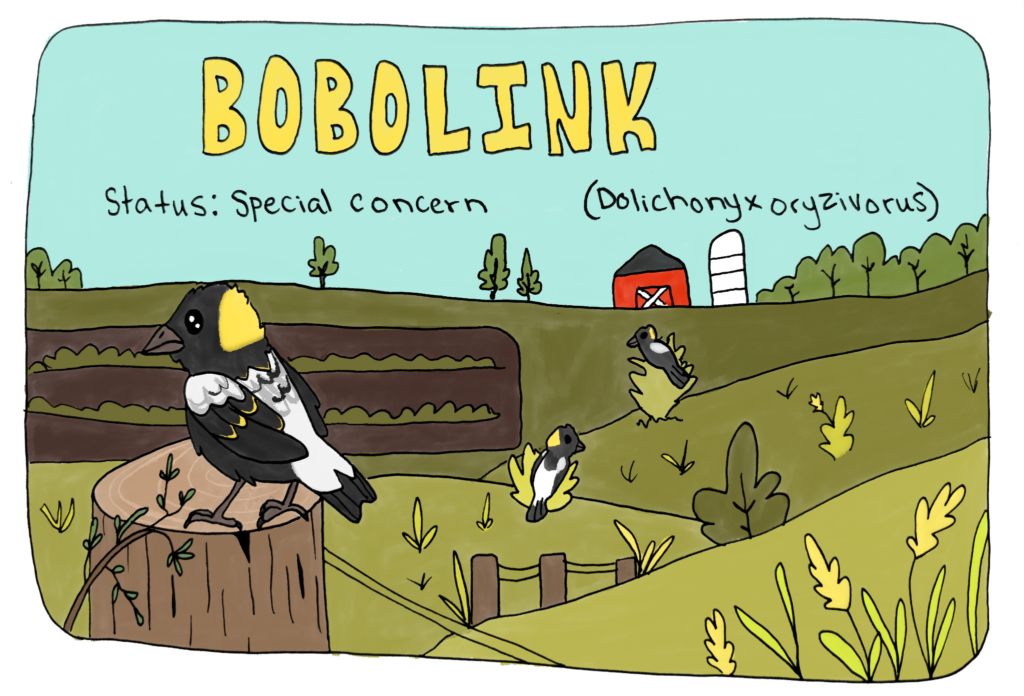
The next type of survey I learned about was for Bobolink. These endangered birds nest in agricultural fields and sound a lot like R2D2 from Star Wars! A lot of my summer was spent visiting farmers and surveying their fields for bobolink. They like to perch on top of taller shrubs in farmlands, making them easy to spot.
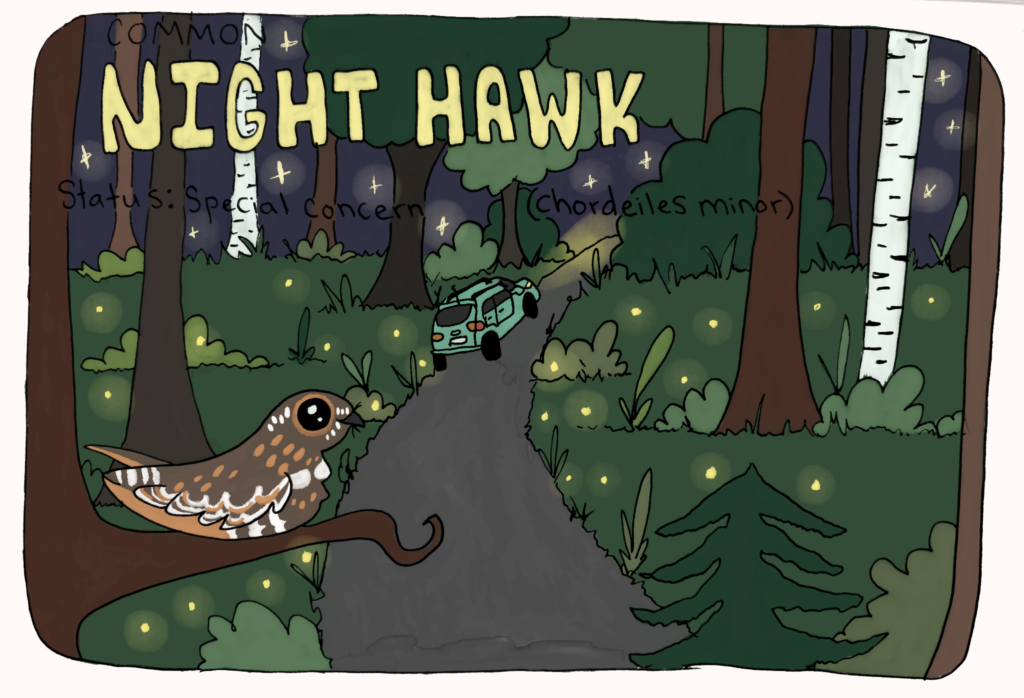
Common Nighthawk surveys start at 8pm and end around 11pm. I only did one, but it was one of my favourite surveys I’ve done! Night Hawks are a nocturnal bird in the nightjar family and are aerial insectivores. They’re known for making an iconic PEENT noise. The survey protocol involved driving along a road, making a total of 11 stops, and standing outside to listen for 6 minutes at every stop. As the sun fell lower, the fire flies came out, we could hear bullfrogs in the distance… but no peent. We heard loud guinea-fowls screeching… but no peent. He heard rap music mysteriously coming from the dark woods… but no peent! We had a fun trip, despite hearing no “peents”.
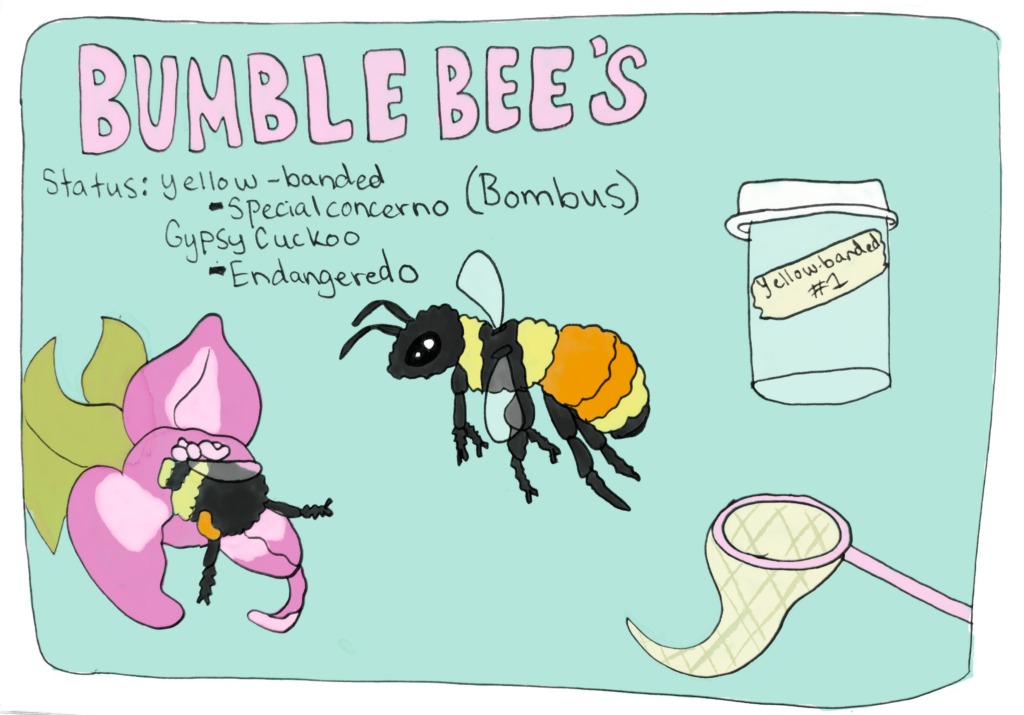
I had the opportunity to learn about bumblebee monitoring. I was surprised to learn that there are so many different bumblebee species! We would go out with a net and catch bumblebees and safely transfer them into a cooler where they would slowly drift off. Once they were not moving around, we were able to ID them, wait for them to wake back up, and watch them fly off.
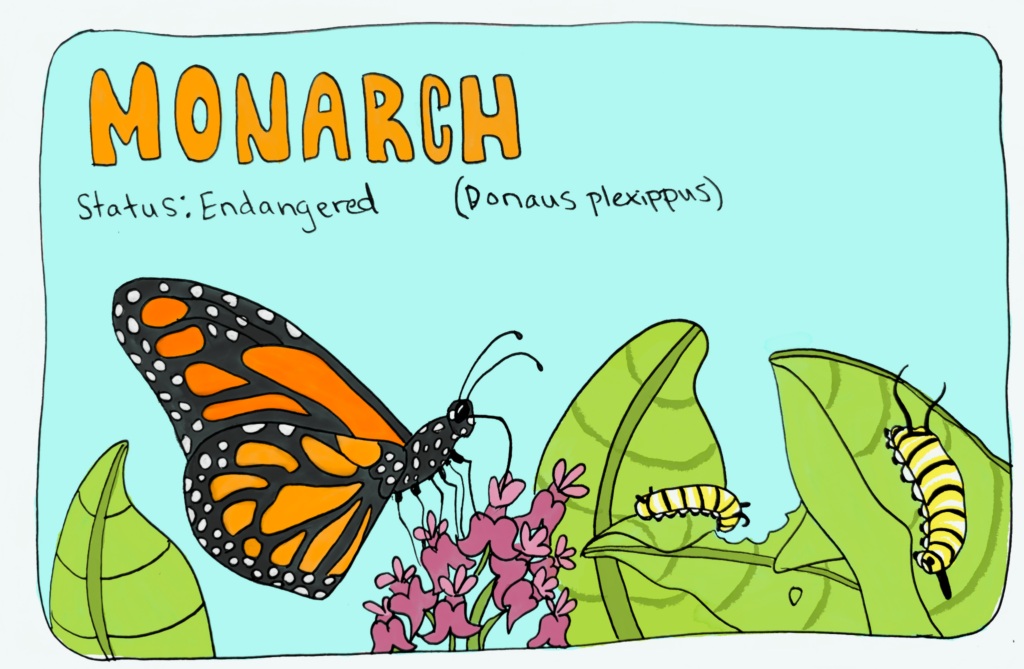
Lastly, the majority of my work this summer involved monarchs. There is a patch of milkweed in Sackville that I frequently visited to monitor for monarch eggs, caterpillars, and butterflies. The protocol involved checking every stem of milkweed in a patch and recording how many eggs and caterpillars were found each time. It was so cool to watch the caterpillars grow up! I also did monarch staging surveys. This involves going to sites where monarchs gather before they make their journey to Mexico. I was able to catch and tag monarch butterflies. This was a full circle moment for me, because when I was in kindergarten, I would tell my teachers I wanted to be a butterfly catcher, and now I am!


